How to Choose Outdoor Furniture for Small Spaces, Balconies & Gardens
Learn how to choose outdoor furniture for small spaces, balconies, patios, and gardens. Compare materials, weather resistance, comfort, and pet-friendly tips.
OUTDOOR MOODBALCONY LIVINGCOZY LIVING
How to Choose Outdoor Furniture for a Small Balcony or Garden: Materials, Size, Weather & Pet-Friendly Tips
Creating a beautiful outdoor space does not always require a large garden or a luxury patio. Sometimes, a small balcony, compact backyard, or quiet corner by the door is enough to become your favorite place to relax.
But choosing outdoor furniture is not only about style. Many people buy a lovely chair or table online, only to realize later that it is too large, difficult to clean, uncomfortable, unstable in the wind, or simply not suitable for their local weather.
The right outdoor furniture should fit your space, handle your climate, support your daily lifestyle, and stay comfortable over time. Whether you are decorating a small apartment balcony, a cozy patio, or a pet-friendly garden corner, this guide will help you choose pieces that are practical, beautiful, and long-lasting.
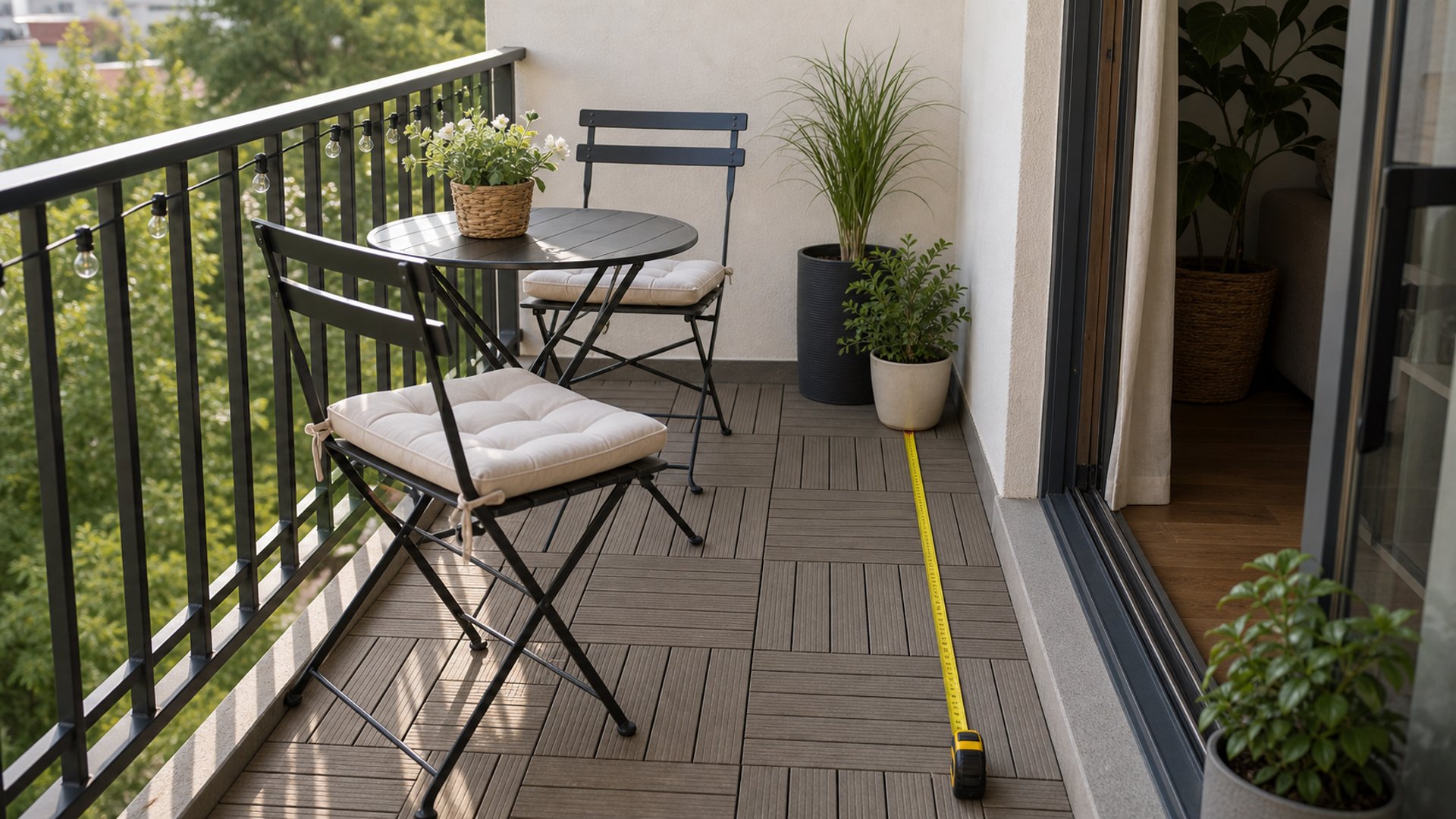
Start With Your Space, Not the Furniture
Before falling in love with a furniture set, start with the most important question: how much space do you actually have?
Small outdoor spaces need careful planning. A chair that looks compact in a product photo may feel bulky on a narrow balcony. A dining set may look elegant in a garden, but leave no walking space on a patio.
Before buying, measure:
The width and depth of your balcony, patio, or garden corner
The size of your doorway
Elevator, stair, or hallway access
Space needed to pull out chairs
Walking space around the furniture
Room for plants, storage, or pet movement
For a small balcony, a bistro set, folding chair, narrow side table, or storage bench usually works better than a full outdoor sofa. For a patio, you may have more freedom to use a loveseat, coffee table, or modular seating. For a garden, lounge chairs, dining sets, and benches can create a more relaxed outdoor living area.
A good rule is to leave enough open space so the area still feels easy to move through. Outdoor furniture should make your space more enjoyable, not make it feel crowded.
Choose Furniture Based on Your Climate
Outdoor furniture faces more challenges than indoor furniture. Sun, rain, wind, dust, humidity, and temperature changes can all affect how long your furniture lasts.
If you live in a rainy or humid area, choose materials that resist rust and moisture. Powder-coated aluminum, PE rattan, quick-dry cushions, and water-resistant fabrics are often better choices than untreated wood or regular steel.
If your outdoor space gets strong sun, look for UV-resistant materials. Fabrics should resist fading, and frames should not become too hot or brittle. Teak, acacia, powder-coated metal, and high-quality outdoor fabric are good options for sunny spaces.
If you live near the coast, salt air can cause metal to corrode faster. In this case, avoid untreated steel and choose rust-resistant aluminum, stainless steel hardware, or properly sealed wood.
If you have a windy balcony, avoid furniture that is too light. Lightweight plastic chairs may be easy to move, but they can also shift or tip over in strong wind. Heavier frames, stable legs, and non-slip feet are safer choices.
If your area has cold winters, think about storage. Can the furniture be folded, stacked, covered, or moved indoors? A beautiful outdoor setup should also be realistic to maintain through different seasons.
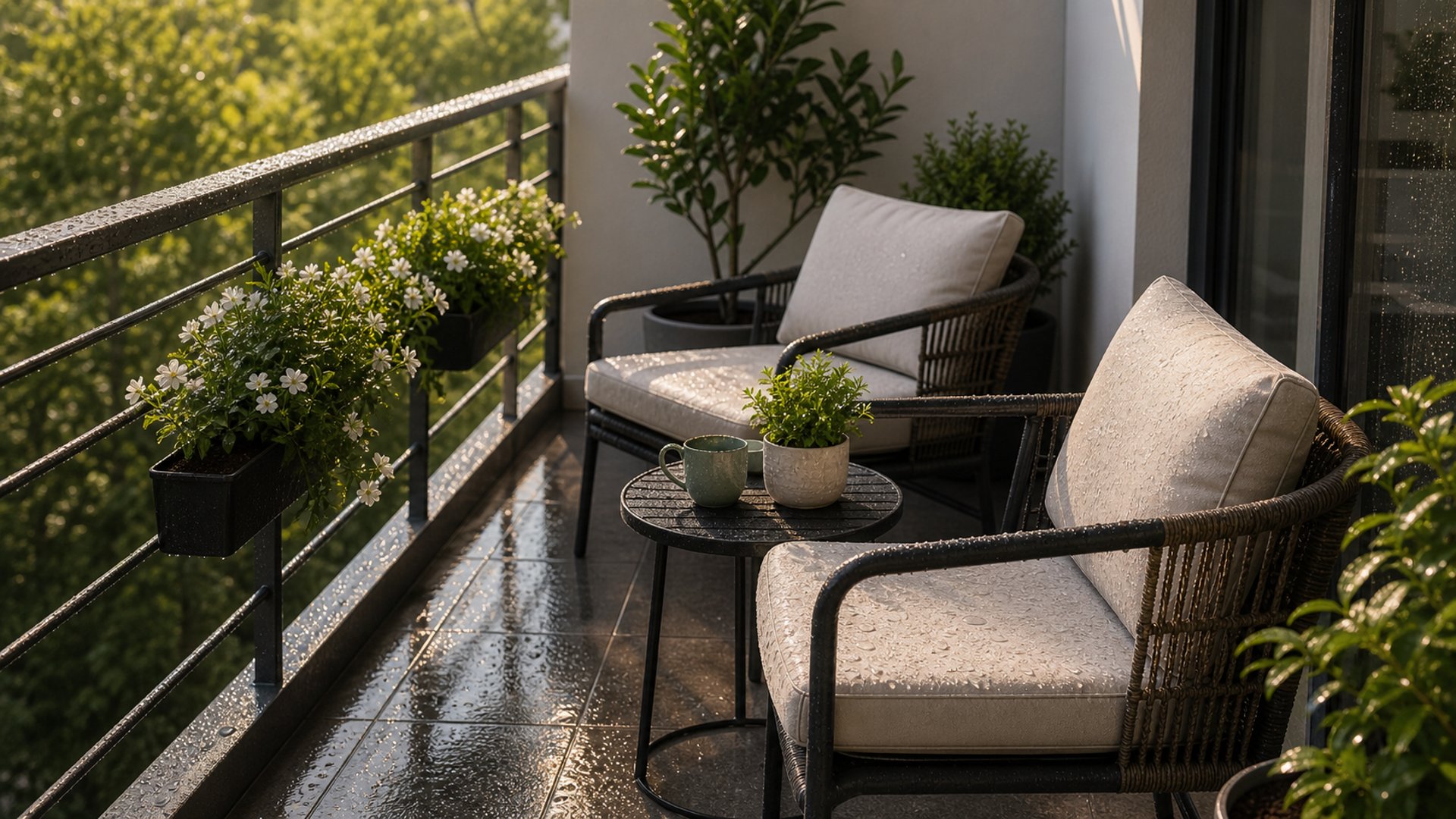
Understand the Main Outdoor Furniture Materials
Different materials create different looks, but they also require different levels of care. Here is a simple guide.
Powder-coated aluminum
This is one of the most practical choices for balconies and patios. It is lightweight, rust-resistant, and easy to move. It works especially well for modern outdoor chairs, dining sets, and compact tables. The only downside is that it may feel less warm and natural than wood.
PE rattan
PE rattan gives a cozy woven look while being more weather-resistant than natural rattan. It is popular for outdoor sofas, lounge chairs, and balcony sets. When buying PE rattan furniture, check the frame quality and weaving tightness. Poor-quality rattan may crack or loosen over time.
Teak or acacia wood
Wood brings warmth, texture, and a premium outdoor feeling. Teak is especially known for durability, while acacia is often more affordable. However, wood needs maintenance. It may require oiling, cleaning, or covering to keep its color and prevent cracking.
Steel
Steel is strong and stable, which can be helpful in windy areas. However, it must be properly treated for outdoor use. If the coating is damaged, steel may rust. It is best for covered patios or places where the furniture will not sit in constant rain.
Outdoor fabric
Cushions and pillows make outdoor furniture much more comfortable, but fabric quality matters. Look for removable covers, quick-dry foam, UV resistance, and easy-clean surfaces. Light-colored fabrics look fresh but may show dirt faster.
Plastic or resin
Plastic and resin furniture can be affordable, lightweight, and easy to clean. They are useful for casual setups or temporary spaces. However, they may not look as premium and can become brittle if exposed to strong sun for a long time.
The best material depends on where you live, how often you use the furniture, and how much maintenance you are willing to do.
Best Furniture Types for Small Balconies and Gardens
For small outdoor spaces, function matters as much as appearance. Every piece should earn its place.
A bistro set is perfect for morning coffee, reading, or two-person dining. It works especially well on apartment balconies because it creates a complete outdoor moment without taking up too much room.
Folding chairs and tables are ideal for renters, small apartments, or flexible outdoor spaces. You can open them when needed and store them away when you want more room.
A storage bench is one of the smartest choices for compact spaces. It provides seating while also storing cushions, gardening tools, pet toys, or outdoor blankets.
Nesting tables are useful when you need flexible surfaces. You can spread them out when guests arrive and tuck them together afterward.
A modular sofa works well for patios or small gardens. It allows you to adjust the layout depending on the occasion, whether you are relaxing alone or hosting friends.
A hanging chair can create a cozy focal point, but it requires extra care. Always check weight limits, ceiling support, frame stability, and available swing space before buying.
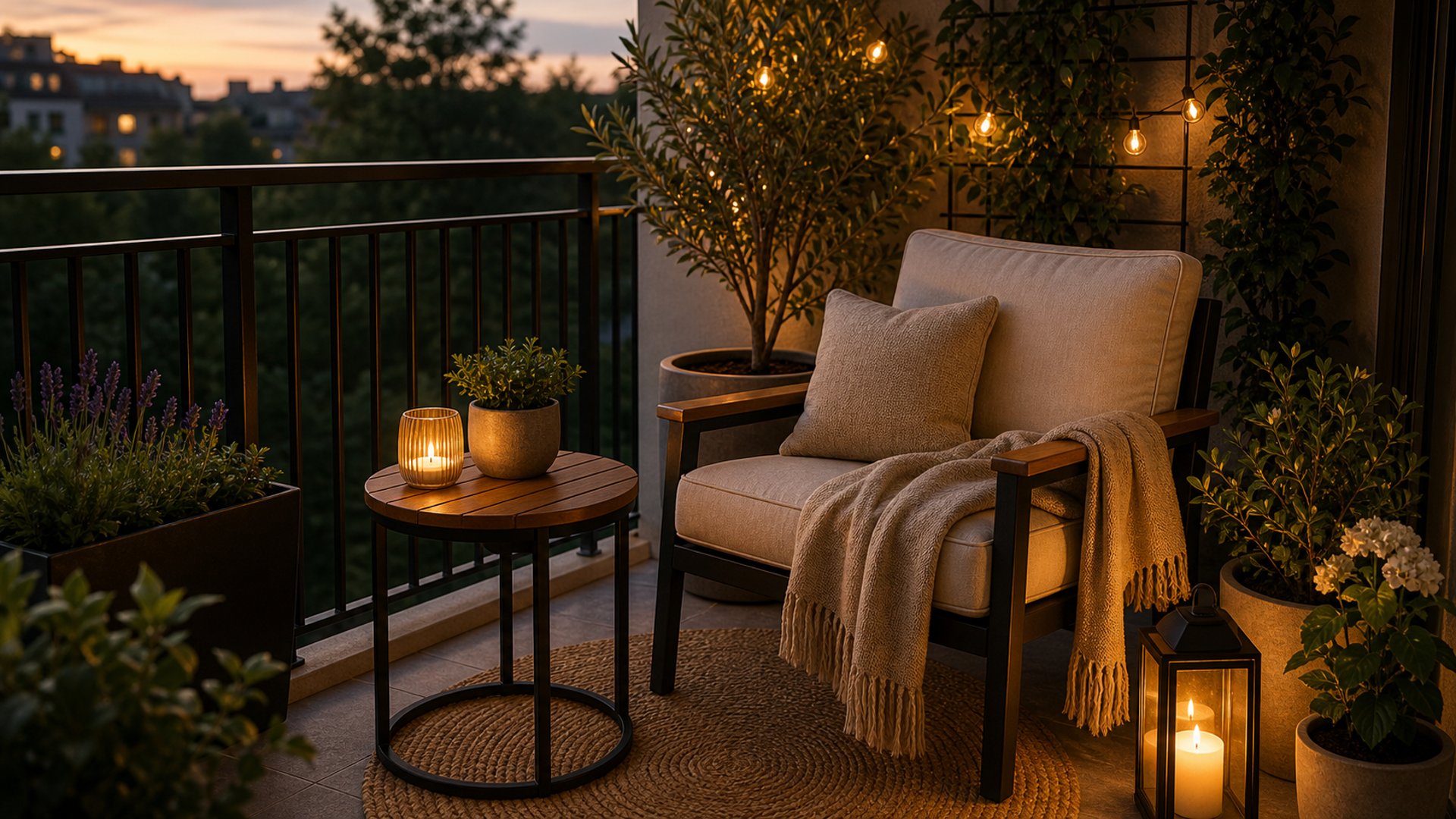
For small outdoor areas, avoid buying too many pieces at once. Start with one comfortable seat, one useful surface, and one element that makes the space feel personal, such as a plant, cushion, lantern, or outdoor rug.
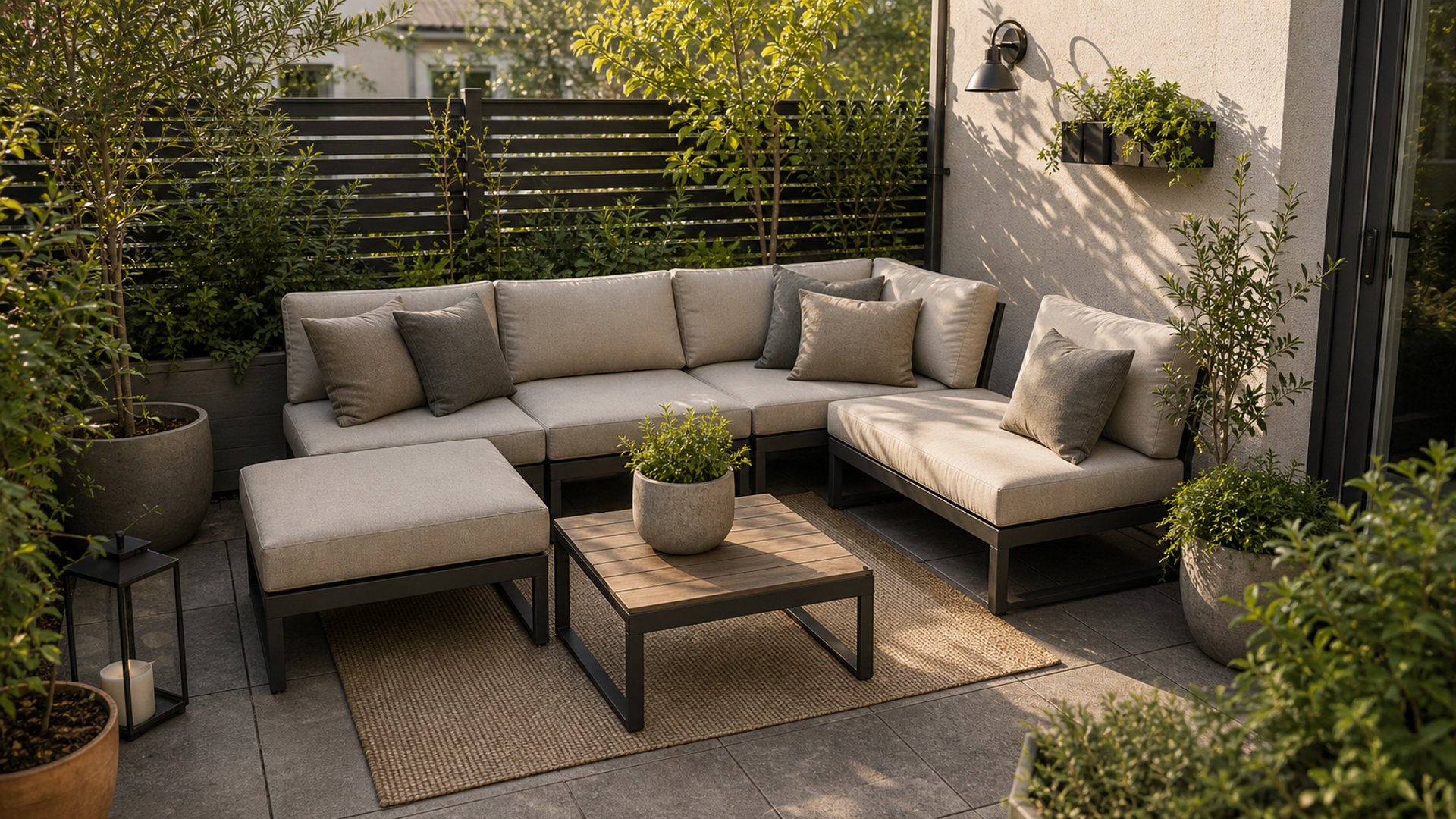
Make It Pet-Friendly
If you share your home with cats or dogs, your outdoor furniture needs to be comfortable, stable, and easy to clean.
Pet-friendly outdoor furniture should have durable surfaces, washable cushion covers, and a stable frame. Avoid delicate materials that scratch easily or trap too much fur. Smooth surfaces, removable covers, and wipe-clean fabrics can save a lot of effort.
For dogs, choose furniture that will not tip easily when they jump up or lean against it. For cats, avoid loose weaving or fragile fabric that invites scratching. Rounded edges are also helpful, especially in smaller areas where pets move around furniture.
Shade is another important detail. If your pet spends time outdoors, make sure there is a cool place to rest. A covered chair, umbrella, pergola, or shaded corner can make the space safer and more comfortable.
Pet-friendly furniture is not only about durability. It is about creating a shared outdoor space where people and pets can relax together.
Comfort Details People Often Forget
Many outdoor furniture mistakes happen because people focus only on appearance. A chair may look beautiful but feel uncomfortable after ten minutes.
Before buying, pay attention to:
Seat height
Seat depth
Back support
Cushion thickness
Armrest position
Table height
Leg stability
Fabric texture
Cleaning difficulty
If you plan to read, drink coffee, or work outside, comfort matters. If you plan to host meals, table height and chair spacing matter. If you want to lounge, deeper seating and softer cushions will make a big difference.
Also think about sun exposure. A dark metal chair may become hot in direct sunlight. A white cushion may look bright and elegant, but it may need more frequent cleaning. A low table may look stylish but may not be practical for eating.
The best outdoor furniture should look good and feel good in real daily use.
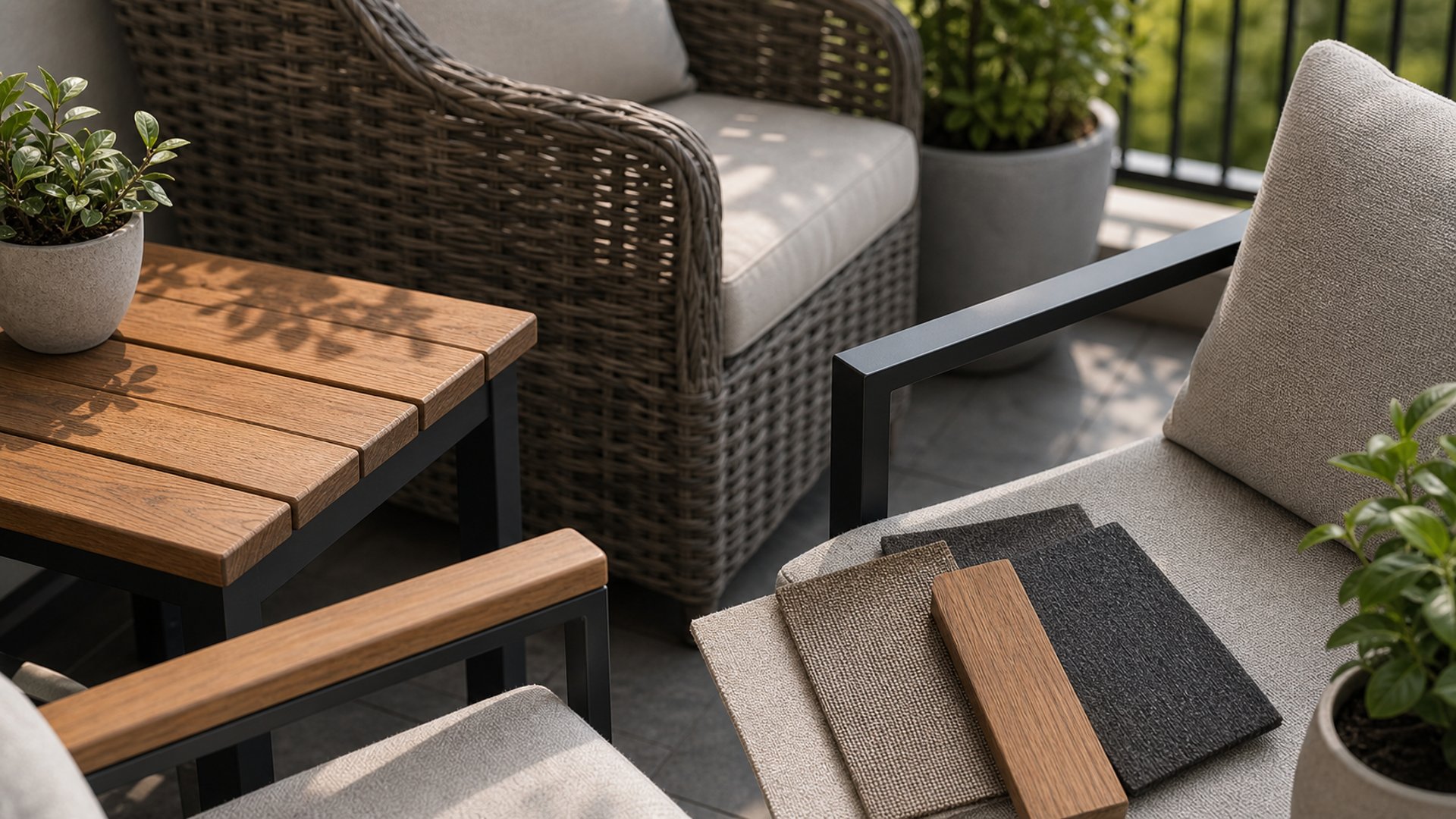
Where to Spend Your Budget First
If you are decorating on a budget, spend money on the parts that affect durability and comfort.
Prioritize:
Strong frame construction
Weather-resistant materials
Comfortable cushions
UV-resistant fabric
Rust-resistant hardware
Easy-clean surfaces
Protective covers or storage
You can spend less on seasonal accessories, small side tables, decorative pillows, lanterns, and outdoor rugs. These items are easier to replace later.
A simple, well-made chair will serve you better than a large, low-quality set that wears out after one season. In outdoor spaces, quality matters because the furniture has to deal with weather, movement, and daily use.
Quick Outdoor Furniture Buying Checklist
Before you buy, ask yourself:
Have I measured my outdoor space?
Will the furniture fit through the door, stairs, or elevator?
Is the material suitable for my local climate?
Can the cushions be removed and cleaned?
Is the frame stable enough for wind or pets?
Will there still be space to walk around?
Can I cover or store it in bad weather?
Does it match how I actually use the space?
Is it comfortable enough for daily relaxation?
If the answer is yes to most of these questions, you are much more likely to choose furniture that works beautifully in real life.
Final Thoughts
Outdoor furniture should do more than decorate a balcony or garden. It should help you create a space that feels calm, useful, and personal.
The best choice is not always the biggest set or the most eye-catching design. It is the furniture that fits your space, suits your weather, feels comfortable, and supports the way you actually live.
Whether you are creating a small balcony coffee corner, a cozy pet-friendly patio, or a relaxing garden space, start with your real needs first. Once you understand your space, climate, materials, and lifestyle, choosing the right outdoor furniture becomes much easier.
At CozyNest Living, we believe a home should feel warm, practical, and personal, inside and outside. With the right outdoor pieces, even the smallest corner can become a place to slow down, breathe, and enjoy everyday comfort.