Cat Furniture for Small Homes and Apartments | CozyNest Living
Discover cat furniture for small homes and apartments, including compact cat trees, window perches, wall shelves, scratching posts and cozy pet corner ideas
PET LIVING
Cat-Friendly Furniture Ideas for Small Homes and Apartments
Living with cats in a small home does not mean giving up comfort, beauty, or good design.
In fact, smaller spaces often encourage better choices. When every corner matters, pet furniture needs to be more thoughtful. It should support a cat’s natural behavior while still fitting into the daily rhythm of the home.
Many people think cat furniture requires a large cat tree, a separate pet room, or a lot of extra space. But cats do not always need more furniture. They need better places to climb, scratch, rest, hide, and observe.
A cat-friendly small home is not about filling the room with pet products.
It is about creating smart, comfortable, and beautiful spaces where people and cats can live together naturally.
Small Homes Need Smarter Pet Furniture
In a small apartment, every piece of furniture should have a clear purpose.
This is especially true for pet furniture. A large, bulky cat tree may work in a spacious room, but in a small home, it can quickly make the space feel crowded.
Instead, look for cat furniture that is compact, stable, and visually calm. The best pieces support daily behavior without taking over the entire room.
A good small-space cat furniture piece might include:
A scratching surface
A resting platform
A soft cushion
A small hiding area
A stable base
A design that blends with existing furniture
When furniture serves more than one purpose, the space feels cleaner and easier to live in.
Small homes do not need more things.
They need better decisions.
Use Vertical Space
Cats naturally enjoy height.
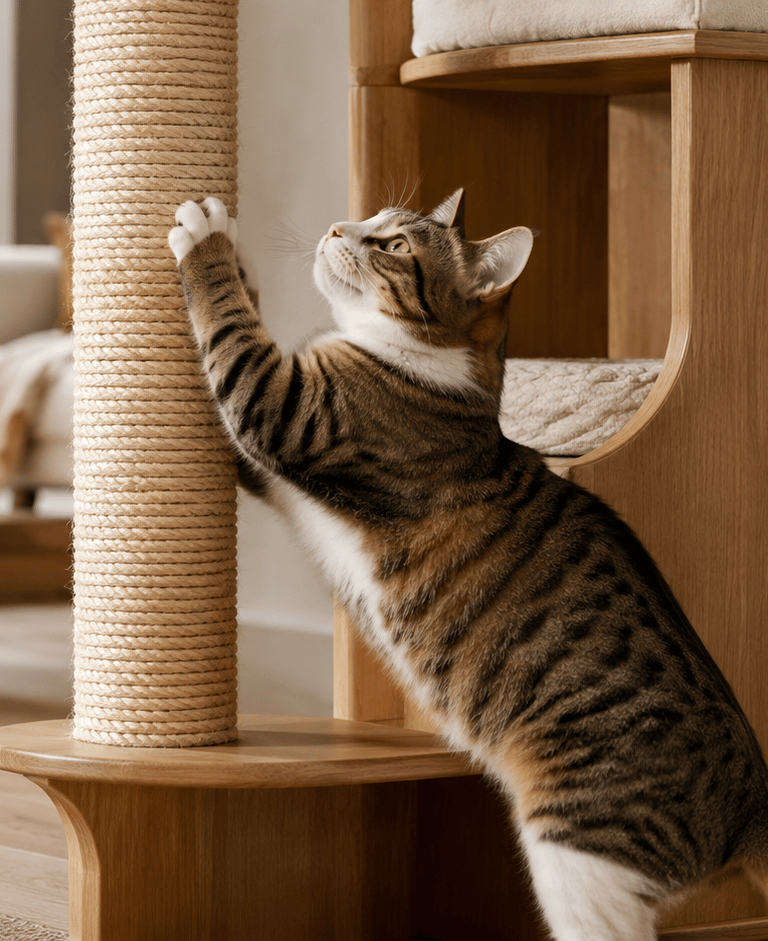
They like to climb, watch the room from above, and rest in places where they feel secure. This makes vertical space especially important in small homes.
If the floor area is limited, think upward.
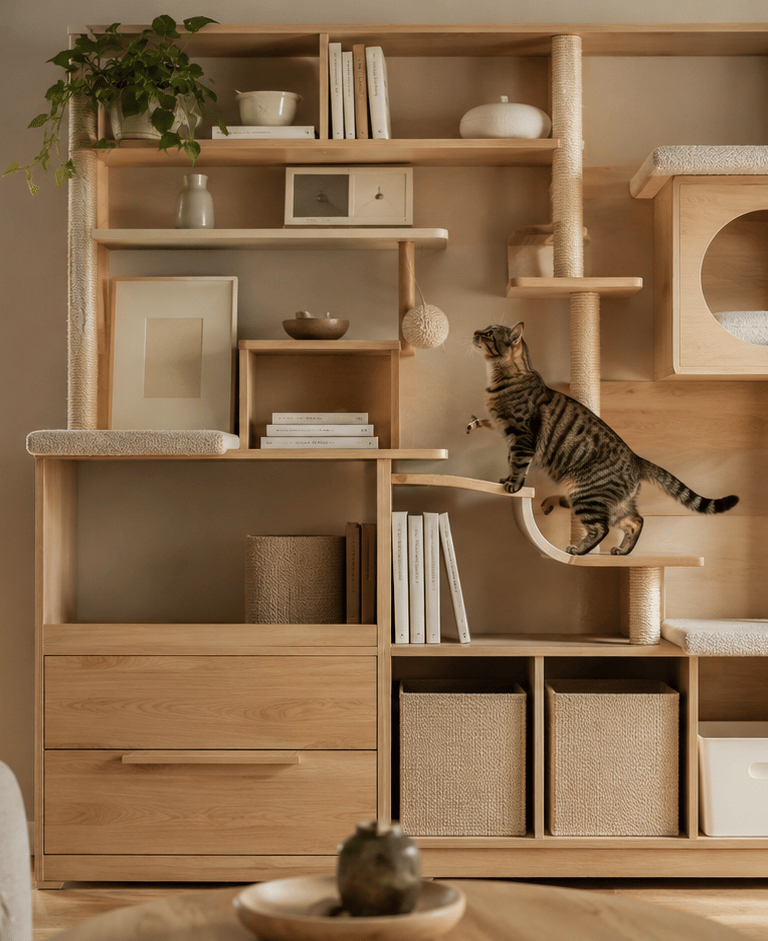
Wall-mounted cat shelves, narrow cat trees, window perches, tall scratching posts, and bookshelf-style cat furniture can all help create a more cat-friendly home without using too much floor space.
Vertical furniture also gives cats more movement opportunities. Instead of only walking across the floor, they can climb, jump, rest, and observe from different levels.
This is useful for both the cat and the room.
The home feels less cluttered, and the cat gains more usable space.
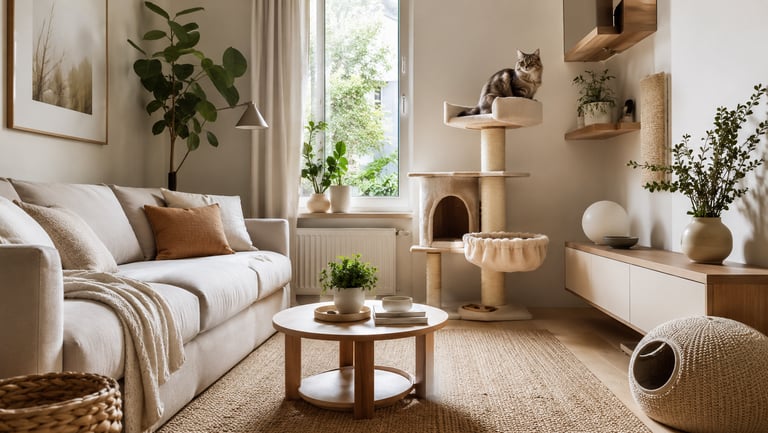
Choose Compact Cat Trees
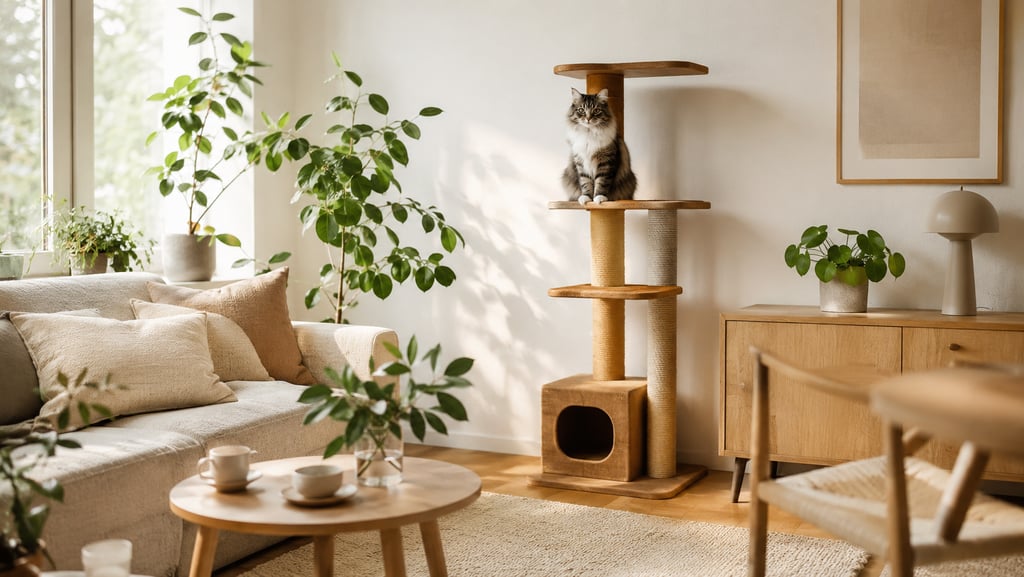
A cat tree can still work in a small home, but its size and shape matter.
Avoid oversized cat trees with wide bases, too many platforms, or heavy visual details. These can dominate a small room and make the space feel less refined.
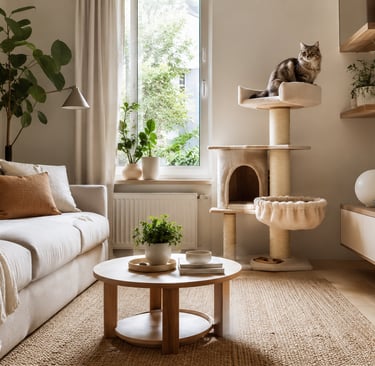
Instead, choose a slim cat tree that fits against a wall, beside a sofa, near a window, or in an unused corner.
A compact cat tree should feel stable, not fragile. Cats often jump, stretch, scratch, and climb with energy, so the structure must feel secure.
Good features for small homes include:
A narrow footprint
A strong base
Sisal scratching posts
One or two resting platforms
A soft cushion
A simple wood or neutral color finish
A compact cat tree should give the cat what it needs without making the room feel smaller.
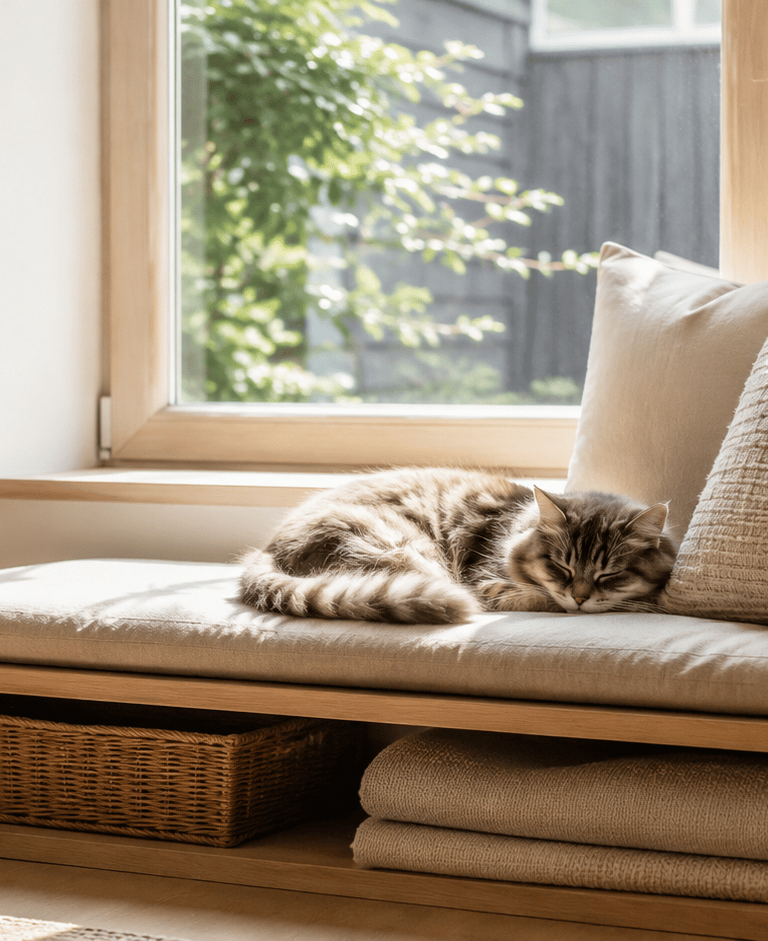
Create a Window Watching Spot
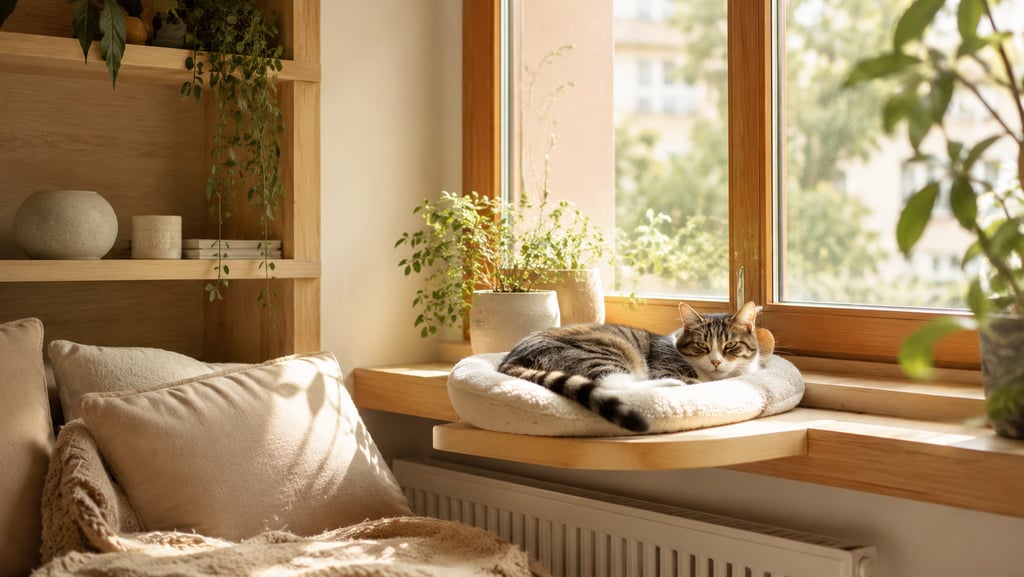
For many cats, the window is one of the most interesting places in the home.
A window gives them light, warmth, movement, and a view of the outside world. Even in a small apartment, a simple window-side corner can become a favorite resting place.
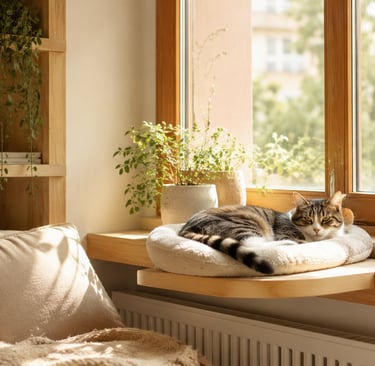
This can be created with a low wooden bench, a padded window perch, a soft cushion, or a small cat platform placed near the window.
The goal is not to create a complicated setup. The goal is to give the cat a comfortable place to watch, rest, and feel connected to the environment.
If the window gets strong sun, make sure the cat can move away when it becomes too warm. If the window opens, safety should always come first.
A window watching spot is one of the simplest and most valuable cat-friendly furniture ideas for small homes.
Choose Furniture With More Than One Function
Small homes benefit from furniture that does more than one thing.
This applies to pet furniture as well.
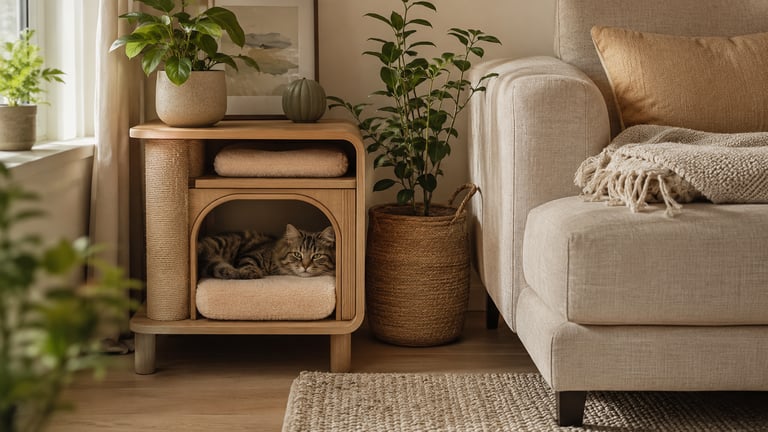
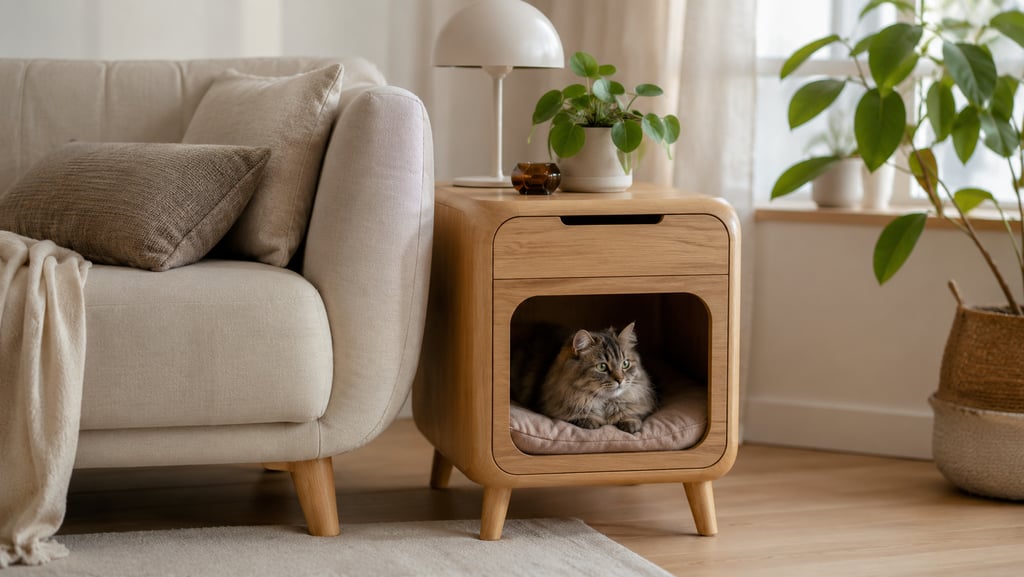
Instead of buying several separate items, look for designs that combine functions. A cat tree can include a scratching post and resting platform. A side table can include a pet bed. A cabinet can include a hidden cat nook. A bench can become a window perch.
Multi-functional pet furniture helps reduce clutter and makes the room feel more intentional.
Examples include:
A cat bed built into a side table
A scratching post combined with a perch
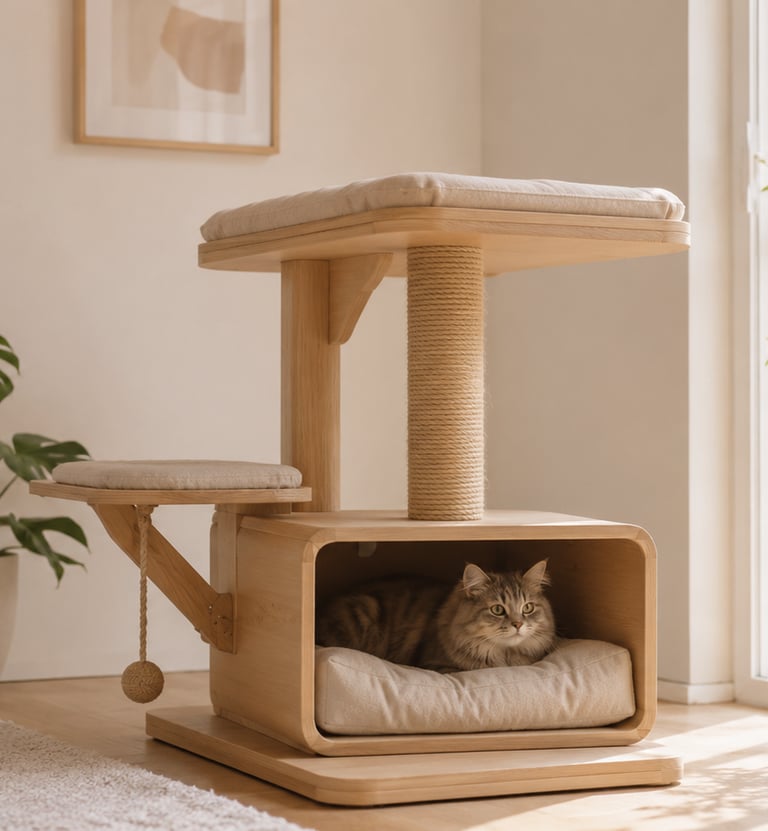
A small cat tree with a hidden resting space
A cabinet with a cat entrance
A window bench with a soft cushion
A bookshelf-style climbing structure
This kind of design works especially well in apartments because it allows pet furniture to become part of the home instead of standing apart from it.
Keep Colors and Materials Calm
Visual calm matters in small homes.
Bright plastic, loud patterns, and bulky synthetic fabrics can make a small room feel more crowded. Even useful pet furniture can become distracting if the colors and materials do not match the rest of the space.
For a softer and more modern look, choose materials that already feel connected to home interiors.
Natural wood, sisal rope, washable fabric, linen-blend cushions, woven textures, and neutral colors usually work well.
Good colors include:
Warm beige
Cream
Natural wood
Soft gray
Muted green
Light brown
Warm white
These tones blend easily with sofas, rugs, shelves, plants, and other furniture.
A cat-friendly home does not need to look like a pet store.
It can feel calm, warm, and beautifully lived in.
Make Scratching Easy and Attractive
Scratching is a natural behavior for cats.
It helps them stretch, maintain their claws, and mark territory. In small homes, providing the right scratching surface is especially important because furniture, rugs, and curtains are often close together.
A good scratching solution should be easy for the cat to access and stable enough to use comfortably.
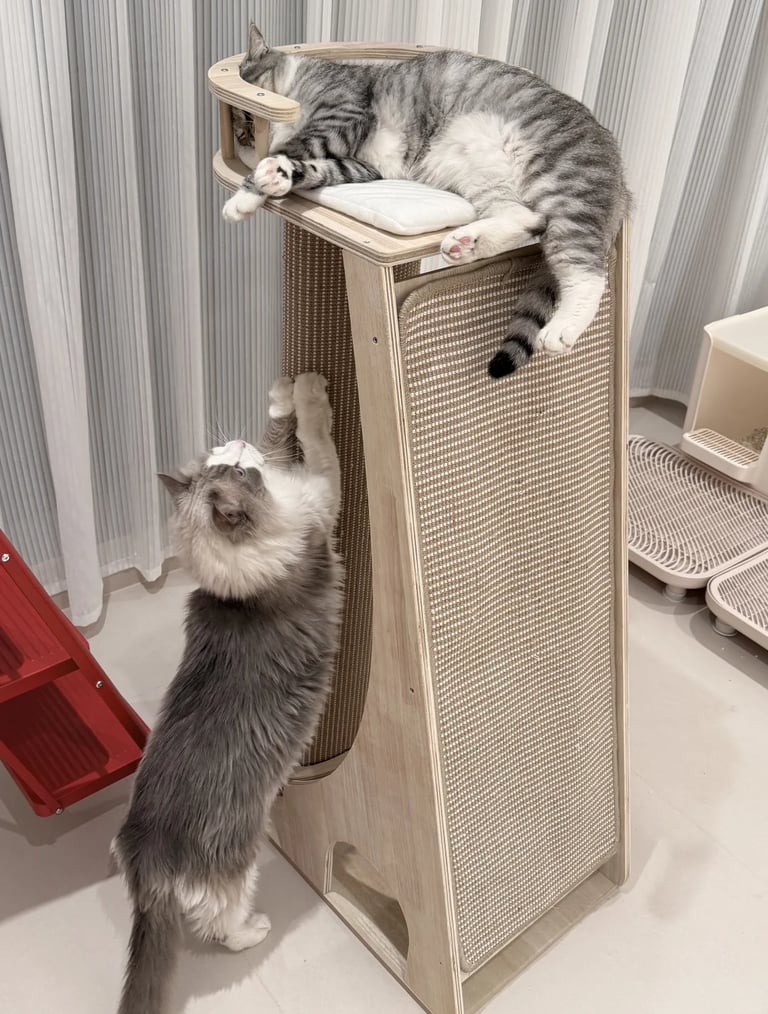
Sisal rope, woven scratching boards, and replaceable scratching panels are practical choices. Vertical scratching posts work well for cats that like to stretch upward, while horizontal scratching pads may suit cats that prefer lower surfaces.
Place scratching furniture near areas your cat already uses. If the scratching post is hidden in a corner the cat never visits, it may be ignored.
Good design is not only about appearance.
It is also about placing the right object in the right place.
Leave Room for Movement
Small homes can quickly become crowded if every empty corner is filled.
Cats need space to move, stretch, jump, and turn around. People also need clear paths through the room.
When placing cat furniture, avoid blocking doors, windows, walkways, cabinets, or daily-use areas. Make sure the furniture does not make the room feel difficult to live in.
A compact cat tree beside a sofa may work better than a large one in the center of the room. A window perch may work better than another floor bed. A wall shelf may work better than a wide climbing structure.
Good pet furniture should improve daily life, not interrupt it.
A small home feels better when both people and cats can move naturally.
Think About Cleaning From the Beginning
Small spaces show mess quickly.
This is why cleaning should be part of the furniture decision. Choose pet furniture that is easy to wipe, vacuum, move, or refresh.
Removable cushions, washable covers, raised bases, replaceable scratching surfaces, and simple shapes are all useful.
Avoid materials that trap too much hair or hold odors easily. Long-pile fabrics may look soft at first, but they can become difficult to maintain.
A cat-friendly small home should be comfortable, but it should also be realistic.
The easier a pet corner is to clean, the more likely it is to stay beautiful over time.
Let the Cat Furniture Belong to the Room
The best cat furniture for small homes does not look like an afterthought.
It belongs to the room.
This happens when the colors, materials, scale, and placement feel connected to the rest of the interior. A wooden cat tree near a wooden cabinet feels more natural. A beige cushion near a neutral sofa feels calmer. A window perch with plants nearby feels more intentional.
You do not need to hide pet furniture.
You simply need to make it feel considered.
When cat furniture blends into the home, the room becomes more comfortable for everyone.
It becomes a shared living space, not a room divided between human furniture and pet furniture.
Final Thoughts
A small home can still be a wonderful place for cats.
The key is not to buy more pet furniture. The key is to choose furniture that works harder, takes up less space, and supports real cat behavior.
Use vertical space.
Create a window watching spot.
Choose compact furniture.
Keep materials calm.
Make scratching easy.
Leave room for movement.
A cat-friendly small home should feel practical, comfortable, and beautiful.
When pet furniture is chosen thoughtfully, it does more than serve the cat.
It helps the whole home feel warmer, calmer, and more complete.